
TrueForge vs. Claude Managed Agents: Who Should Own Your Agent Infrastructure?
Table of Contents
- Why this decision matters more than it looks like it does
- The problem TrueForge is trying to solve
- What TrueForge actually does differently
- Weighing the cost claim honestly
- Where a managed service still wins
- Practical questions for platform teams evaluating either path
- Building the skills to make that call
AI agents stopped being chatbots a while ago. In production environments today, they file pull requests, query databases, call internal APIs, and increasingly, take actions against real infrastructure — provisioning resources, adjusting configurations, and triggering deploys.
That shift raises a question platform teams can no longer defer: when an agent acts on your behalf, whose infrastructure is it really running on, and who's accountable when something goes wrong?
TrueFoundry's answer, announced this month, is TrueForge — an open-source agent harness built as a direct, vendor-neutral alternative to Claude Managed Agents. It's a useful moment to step back and ask a broader question than "Which product is better?" What should platform teams actually be optimising for when they choose the layer that governs how their agents run?
Why this decision matters more than it looks like it does
It's tempting to treat "which agent framework do we use" as a tooling decision on par with picking a CI runner or a logging library — swap it out later if it doesn't work. In practice, agent infrastructure decisions are stickier than that, for a few reasons.
First, agents accumulate integrations fast. Every tool connection, every MCP server, every approved action pattern becomes part of an operational surface that's expensive to rebuild.
Second, agent frameworks increasingly own identity and audit trail — ripping one out later means re-establishing accountability history, not just re-pointing an API call.
Third, and most underappreciated: the framework you pick shapes which models you can realistically use going forward. A harness tightly coupled to one vendor's models makes "let's also try this other model for this workload" a much bigger lift than it should be.
None of that means the decision needs to be agonised over for months. It does mean it's worth evaluating with the same rigour teams already apply to choosing a cloud provider or a Kubernetes distribution learned in a DevOps Engineering Bootcamp — because functionally, that's what it is.
The problem TrueForge is trying to solve
Claude Managed Agents makes it easy to spin up production-grade agents fast, and that's a legitimate strength — for teams that want an agent running against real tools within days rather than weeks, a managed service with sensible defaults is genuinely valuable.
But that convenience comes bundled with a dependency: your agents run on Anthropic's infrastructure, against Anthropic's models, priced on Anthropic's terms.
For a team standardising its entire agent fleet on one vendor, that's a bet — on pricing staying favourable, on that vendor's roadmap matching your needs, and on never needing a model better suited to a specific task.
TrueFoundry CEO Nikunj Bajaj frames the incentive problem bluntly: "A provider selling you a million tokens for $50 has zero incentive to tell you the same task could be done using a model that charges 50 cents for a million tokens."
Whether or not that specific price gap holds for your workloads, the structural point stands — a single-vendor harness has no reason to route you toward a cheaper or better-fit model.
It's the same dynamic that shows up anywhere a vendor sells both the metered resource and the tool that decides how much of it you consume; the incentives just aren't aligned with minimising your bill.
What TrueForge actually does differently
TrueForge is a harness, not a model — it sits between your team and 20+ models (OpenAI, Anthropic, and others), letting you route each task to whichever model fits on cost, latency, or quality grounds instead of defaulting to one provider for everything.
In practice, that routing layer is what lets a team run a cheap, fast model for high-volume, low-stakes classification tasks while reserving a more expensive, higher-reasoning model for the handful of tasks that actually need it — a pattern that's hard to implement cleanly when your harness assumes one model family throughout.
On top of that routing layer, TrueForge ships with a set of building blocks aimed squarely at production concerns rather than demo concerns:
- 40+ built-in tools and MCP support: You're not limited to a vendor's curated toolset. This matters because most organisations' real integration needs — the internal ticketing system, the proprietary deployment pipeline, the legacy database — were never going to be covered by a vendor's out-of-the-box tool list anyway.
- Sandboxed execution environments: Agent actions don't run with unrestrained access to production. An agent that can execute shell commands or hit internal APIs needs a blast radius that's deliberately constrained — the same Linux administration discipline behind why you wouldn't give a new hire production sudo on day one.
- Human-approval workflows: Actions that warrant a person in the loop can require approval before execution — the difference between an agent that drafts a database migration and one that's allowed to run it unattended.
- AI Gateway: Budget enforcement and guardrails can be applied across models and teams, giving platform teams a single point to cap spend, rate-limit, and apply policy regardless of which model or team is making the call.
- Identity tracking per agent: This closes a gap TrueFoundry calls out directly — organisations where every agent action traces back to generic shared accounts like "foo" or "bar" can find post-incident accountability nearly impossible.
That last point is the one platform and security teams should sit with longest. Agent identity and audit trail aren't a nice-to-have once agents are touching production — they're the difference between a five-minute root-cause investigation and a multi-day forensic exercise, and the kind of access-control thinking covered in an Azure Architecture Training program.
If an agent made an unexpected change to a production config at 2 a.m., "which agent, acting under whose authorisation, with what tool access" needs to be a query you can run, not a mystery you have to reconstruct from scattered logs.
Weighing the cost claim honestly
TrueFoundry claims TrueForge can cut operating costs by roughly 50% through model-selection optimisation alone.
That's a meaningful number if it holds, and it's worth treating with appropriate scepticism rather than taking at face value — actual savings depend heavily on your workload mix, how much of your usage is genuinely routable to cheaper models without a quality regression, and how much engineering effort goes into building and maintaining that routing logic in the first place.
A team with a handful of well-understood, high-volume agent tasks might see real savings quickly. A team with a small number of complex, high-stakes agent workflows might find the routing flexibility matters less than the governance and identity features do.
The more durable argument isn't the cost claim; it's the architecture.
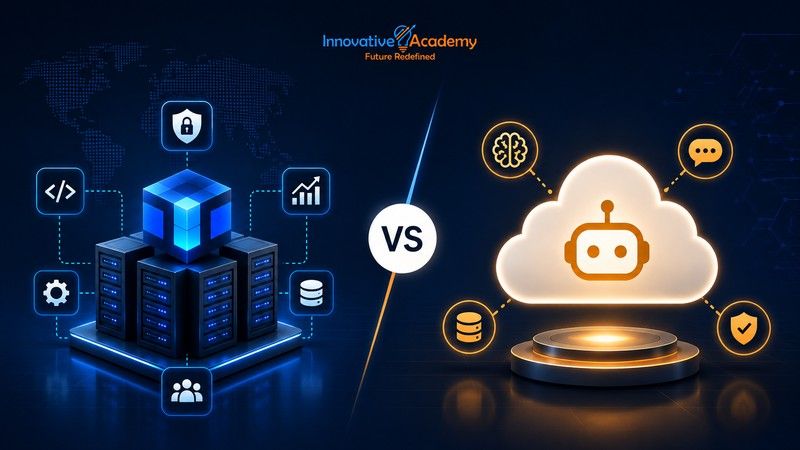
A harness that treats governance, identity, and model choice as first-class, swappable layers is a fundamentally different bet than a managed service that couples all three to one vendor — the same layered thinking taught in Azure Architecture Training.
Swappable layers age better — they let you adopt a better model six months from now without a migration project, and they let you tighten a governance policy without waiting on a vendor's roadmap.
Where a managed service still wins
It would be a mistake to read this as "open and vendor-neutral always beats managed."
For organisations already standardised on Anthropic, with governance needs the managed offering already covers, the operational simplicity of Claude Managed Agents is a real advantage, not a compromise.
Running an open-source harness means someone on your team owns its uptime, its security patching, and its integration surface — that's meaningful ongoing engineering investment, not a one-time setup cost.
If your team is small, your use case is narrow, and Anthropic's models already meet your quality bar, the managed path can be the more responsible choice, not the less sophisticated one.
The question worth asking isn't "which is objectively better" — it's "which set of tradeoffs matches the agent fleet we expect to be running in two years?"
A team betting on a single, narrow agent use case has different needs than a platform team standing up agent infrastructure meant to serve a dozen internal teams and workloads.
Practical questions for platform teams evaluating either path
Before committing to a framework, a few questions tend to surface the real answer faster than a feature comparison chart:
- If we needed to switch models next quarter — for cost, quality, or availability reasons — how much of our integration and governance layer would we have to rebuild?
- Can we currently answer "which agent, under whose authorisation, did this" for every production action an agent has taken in the last 30 days?
- Where does policy enforcement — spend limits, tool access, approval gates — actually live, and who owns changing it?
- If this framework's vendor changed pricing or deprecated a feature we depend on, what's our actual exposure?
None of these questions have a universally right answer. They're diagnostic — the point is knowing where you stand before an incident forces you to find out.
Building the skills to make that call
Evaluating agent infrastructure like this takes more than reading vendor comparisons — it takes hands-on fluency in the cloud, DevOps, and security fundamentals underneath the abstraction: how sandboxing actually isolates a workload, how an AI gateway enforces policy, how identity and access controls hold up under audit, and how to reason about the tradeoffs between a managed service and infrastructure you own and operate yourself.
That's exactly the kind of practical, project-based skill-building Innovative Academy focuses on in its Bengaluru-based DevOps Engineering Bootcamp, AWS Training, and Azure Architecture Training — hands-on labs, real-time industry projects, and placement support for engineers who want to be the ones making these infrastructure calls, not just reading about them.
As AI agents become increasingly embedded in production infrastructure, the ability to understand cloud architecture, DevOps automation, identity, security, and governance will become increasingly valuable.
The real advantage may not come from choosing TrueForge or Claude Managed Agents today. It may come from building the technical depth to evaluate, operate, and change agent infrastructure as your organisation's needs evolve.