
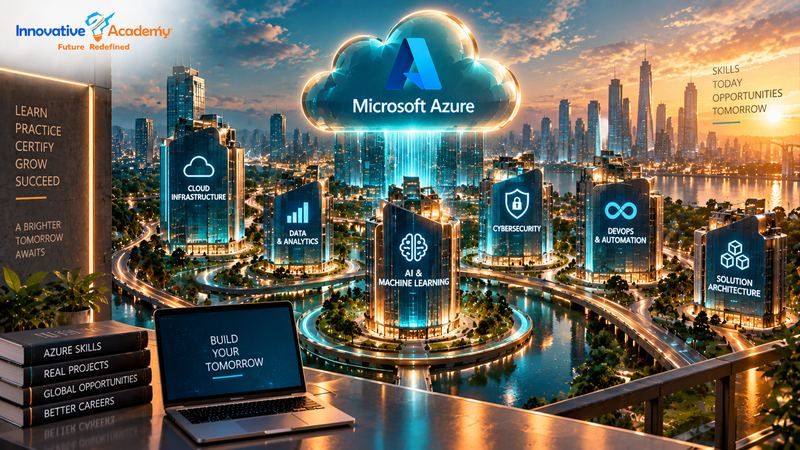

The Scope of Jobs After Completing a Microsoft Azure Course
Table of Contents
- 1. Introduction
- 2. What Is Microsoft Azure?
- 3. Why Microsoft Azure Matters
- 4. The Scope of Jobs After Completing a Microsoft Azure Course
- 5. Job Roles You Can Pursue With Microsoft Azure
- 6. Additional Benefits of a Microsoft Azure Certification
- 7. FAQs
Microsoft Azure has become an important part of modern cloud computing, and organizations across industries continue to adopt cloud platforms for application development, data management, infrastructure, security, and business operations. This growing adoption has created opportunities for professionals who understand how to deploy, manage, secure, and optimize Azure environments.
For students, graduates, IT professionals, and career switchers, completing a Microsoft Azure course in Bangalore can provide a structured way to build practical cloud skills and prepare for a range of technology roles.
1. Introduction
Before looking at the career opportunities available after completing a Microsoft Azure course, it is useful to understand what Azure is and why it has become important in the IT industry.
AWS, Microsoft Azure, and Google Cloud are among the most widely recognized cloud computing platforms. Microsoft's strong presence in enterprise technology has helped Azure become an important platform for organizations looking to migrate applications, infrastructure, databases, analytics workloads, and other services to the cloud.
As organizations continue adopting cloud technologies, there is a growing need for professionals who can work with cloud infrastructure and services. Azure provides a broad collection of services covering computing, storage, networking, databases, analytics, security, artificial intelligence, and application development.
For someone planning a career in cloud computing, learning Azure can therefore provide a foundation for developing skills across several technical specializations.
2. What Is Microsoft Azure?
Microsoft Azure is Microsoft's cloud computing platform. It provides organizations with access to infrastructure, platforms, applications, databases, storage, networking, security, analytics, and other services through the cloud.
Instead of purchasing and maintaining all the physical infrastructure required to run applications and IT systems, organizations can use Azure services according to their requirements and scale resources as their workloads change.
Azure also integrates with Microsoft's broader technology ecosystem. Services and technologies associated with Windows Server, Active Directory, SQL Server, Microsoft 365, development tools, and enterprise applications can work alongside Azure services.
Azure supports a wide range of use cases, including:
- Cloud infrastructure and virtual machines
- Application development and deployment
- Cloud storage and backup
- Networking and connectivity
- Database management
- Data analytics
- Artificial intelligence and machine learning
- Identity and access management
- Cloud security
- Disaster recovery and business continuity
Professionals who want to build a foundation in networking before moving into cloud computing can also explore CCNA training in Bangalore as part of their technical learning path.
3. Why Microsoft Azure Matters
Career Advancement
Azure skills can be useful for professionals who want to enter cloud computing or expand their existing IT expertise. Depending on their background and specialization, learners can move toward roles involving cloud administration, development, DevOps, networking, security, data, artificial intelligence, or cloud architecture.
An Azure certification can also provide a structured way to validate knowledge in a particular Azure role or technology area.
Faster and More Flexible Development
Azure provides cloud-based resources that development teams can use to build, deploy, and manage applications without maintaining all of the underlying physical infrastructure themselves.
This approach can allow organizations to provision resources quickly, experiment with new solutions, and scale infrastructure according to application requirements.
Security and Compliance
Security is a major consideration for organizations operating cloud environments. Azure provides services for identity management, access control, monitoring, threat protection, encryption, security management, and compliance.
Professionals working with Azure therefore need to understand not only how to deploy cloud resources but also how to protect them and manage access appropriately.
Scalability
One of the key characteristics of cloud computing is the ability to scale resources according to demand. Azure provides services that allow organizations to increase or reduce computing, storage, and other resources based on workload requirements.
This makes cloud platforms useful for organizations whose application workloads change over time or experience periods of high demand.
Integrated Development and Delivery
Azure supports modern software development and DevOps workflows. Teams can integrate source control, automated testing, continuous integration, continuous delivery, infrastructure management, monitoring, and deployment into their development processes.
Learners interested in combining Azure with DevOps can explore the AWS DevOps training program and build broader cloud and DevOps knowledge.
Disaster Recovery and Business Continuity
Cloud platforms can also support backup, disaster recovery, and business continuity strategies. Organizations can design recovery solutions based on factors such as application requirements, data importance, recovery objectives, and operational costs.
Understanding these concepts is valuable for cloud professionals because maintaining availability and protecting business data are important parts of enterprise IT operations.
4. The Scope of Jobs After Completing a Microsoft Azure Course
Completing a Microsoft Azure course can provide a foundation for pursuing several technology careers. The exact opportunities available to an individual depend on their previous experience, technical skills, certification level, practical knowledge, and specialization.
Azure skills can be relevant to roles involving cloud infrastructure, application development, DevOps, security, databases, data engineering, and cloud architecture.
For beginners, a structured learning path can start with fundamental cloud concepts and gradually move toward administration, networking, security, DevOps, or architecture.
Hands-on practice is particularly important. Working with virtual machines, virtual networks, storage, identity, databases, monitoring, security controls, and deployment workflows can help learners understand how Azure is used in practical environments.
5. Job Roles You Can Pursue With Microsoft Azure
Cloud Developer
A cloud developer designs, develops, tests, and maintains applications that run on cloud infrastructure. The role may involve writing code, integrating cloud services, troubleshooting applications, and building solutions according to business requirements.
People entering this field generally benefit from software development knowledge combined with cloud platform skills.
Azure DevOps Engineer
An Azure DevOps Engineer works across development and operations to improve the software delivery lifecycle. Typical responsibilities can include continuous integration and continuous delivery, source control, automation, infrastructure management, testing, monitoring, and release management.
Professionals interested in this career path can also benefit from learning technologies such as Linux, Git, Docker, Kubernetes, Jenkins, Terraform, and cloud platforms.
Innovative Academy also provides a DevOps Bootcamp in Bangalore covering practical DevOps technologies and workflows.
Cloud Systems Engineer
A Cloud Systems Engineer works with cloud infrastructure and systems. Responsibilities can include resource management, system configuration, monitoring, troubleshooting, patching, performance management, and operational support.
A strong understanding of operating systems and networking can be particularly useful for this role. Learners can strengthen their Linux skills through Linux administration training in Bangalore.
Cloud Security Engineer
A Cloud Security Engineer focuses on protecting cloud infrastructure, applications, identities, and data. The role can involve access management, security monitoring, vulnerability management, network security, compliance, threat detection, and security controls.
As organizations continue to expand their cloud environments, cloud security remains an important area of specialization.
Azure Solutions Architect
An Azure Solutions Architect designs cloud solutions based on an organization's technical and business requirements. The role can involve architecture planning, networking, identity, security, compute, storage, databases, application integration, scalability, and cost considerations.
Communication and requirement-analysis skills are also important because architects often work with developers, administrators, security teams, business stakeholders, and other technical professionals.
Azure Database Administrator
Azure database professionals work with database services and data platforms running in Azure environments. Their responsibilities can include database configuration, performance management, security, backup, recovery, availability, and ongoing administration.
Knowledge of SQL Server and Azure database services can be useful for professionals pursuing this specialization.
Microsoft Azure Administrator
An Azure Administrator manages cloud resources and services within an Azure environment. Typical responsibilities can include managing identities, compute resources, storage, virtual networks, monitoring, governance, and other infrastructure services.
This role can be suitable for IT professionals who want to move from traditional infrastructure administration into cloud administration.
Azure Data Scientist
Azure also provides services for machine learning, artificial intelligence, data analytics, and data science. Professionals with a background in statistics, programming, machine learning, or data science can use Azure to develop and deploy machine learning workloads.
This creates opportunities for professionals who want to combine cloud computing with data and AI technologies.
6. Additional Benefits of a Microsoft Azure Certification
Career Flexibility
One of the advantages of learning Azure is the variety of career directions available. Depending on their interests and existing technical background, professionals can explore areas such as:
- Cloud Administration
- Cloud Development
- DevOps Engineering
- Cloud Security
- Cloud Architecture
- Data Engineering
- Artificial Intelligence
- Database Administration
This flexibility allows learners to specialize according to their career goals rather than limiting themselves to a single type of cloud role.
Structured Learning
Microsoft's role-based certification framework provides learners with structured paths for developing Azure knowledge. Beginners can start with foundational concepts before moving into associate, expert, or specialized areas as their knowledge and experience develop.
Practical learning should accompany certification preparation. Building projects, working with Azure services, troubleshooting configurations, and practicing real-world scenarios can help turn theoretical knowledge into usable technical skills.
For learners who want to develop broader cloud knowledge, Innovative Academy also offers AWS training in Bangalore.
7. FAQs
1. What is the scope of jobs after completing a Microsoft Azure course?
Completing a Microsoft Azure course can prepare learners for different cloud-related career paths, including Azure Administrator, Cloud Engineer, Cloud Developer, DevOps Engineer, Cloud Security Engineer, Solutions Architect, database professional, and data or AI-related roles. The opportunities available depend on the learner's experience, practical skills, specialization, and certification level.
2. What salary can I expect after completing a Microsoft Azure course?
Azure-related salaries in India vary significantly based on experience, technical specialization, location, job role, organization, and practical skills. Instead of treating a single salary figure as a guarantee, learners should consider the role they are targeting and the skills employers typically expect for that position.
3. Are there different types of Microsoft Azure certifications?
Yes. Microsoft Azure certifications are organized around different roles and skill levels. Certification paths include foundational, associate, expert, and specialty areas, covering fields such as Azure administration, development, security, architecture, data, and AI.
4. Is Azure suitable for beginners?
Yes. Beginners can start with fundamental cloud concepts and gradually learn Azure services such as virtual machines, storage, networking, identity, databases, and monitoring. A structured Azure course with hands-on labs can make the learning process easier to follow.
5. Is networking knowledge useful for an Azure career?
Yes. Networking is an important part of cloud infrastructure. Concepts such as IP addressing, DNS, routing, subnets, VPNs, firewalls, load balancing, and virtual networks are useful when working with Azure environments.
Learners can build these fundamentals through CCNA training in Bangalore before progressing deeper into cloud computing.
6. How can I prepare for an Azure career?
A practical learning path can include cloud fundamentals, Azure services, networking, Linux, security, identity, databases, monitoring, automation, and hands-on projects. Certification preparation can then be aligned with the specific Azure role you want to pursue.
Conclusion
The scope of jobs after completing a Microsoft Azure course extends across cloud administration, development, DevOps, security, architecture, databases, data, and artificial intelligence. Azure can therefore serve as a foundation for several different IT career paths.
However, completing a course or certification alone does not guarantee employment. Practical skills, project experience, problem-solving ability, communication, and continuous learning all contribute to career development in cloud computing.
If you are looking for structured Microsoft Azure training in Bangalore, Innovative Academy provides online and classroom learning options with practical training and placement assistance.