
How Resume Screening Actually Works in 2026
1. Introduction
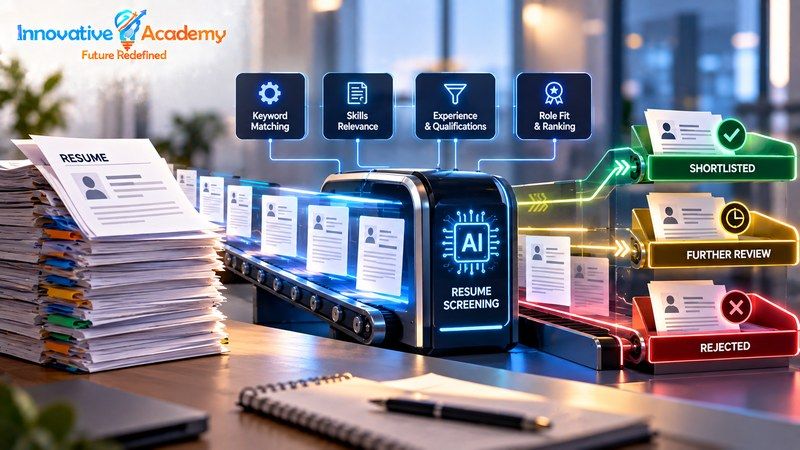
Resume screening in 2026 is more sophisticated than the traditional idea of a single Applicant Tracking System (ATS) simply counting keywords. In many hiring workflows, resumes are first processed by software that extracts text and structure, while additional automated or AI-assisted tools may help recruiters identify relevant skills, experience, and qualifications.
The exact process varies by employer, ATS, recruiter, and job role. However, one principle remains consistent: a resume needs to be both machine-readable and useful to the person reviewing it.
For IT freshers, this means focusing on accurate technical skills, meaningful projects, correctly described certifications, readable formatting, and evidence that supports the claims made on the resume.
2. The Two-Layer System Screening Your Resume
Layer One: Resume Parsing
The first stage is commonly the extraction of information from the resume. An ATS or related recruiting system may identify your name, contact information, education, employment dates, skills, certifications, and other structured information.
If the layout prevents important information from being extracted correctly, the recruiter may not see the content in the way you intended. This is why readable formatting matters even when the resume looks visually attractive to a human reader.
Layer Two: Relevance and Matching
Modern recruiting workflows can also use automated matching, search, ranking, or AI-assisted tools to help identify candidates whose experience is relevant to a particular vacancy. These systems can consider the relationship between skills, job titles, experience, qualifications, and the language used in the job description.
This does not mean every company uses the same AI system or that every resume receives an identical automated score. Recruiters can use different platforms and workflows depending on the organization and role.
The practical lesson is simple: write for clarity and relevance rather than trying to manipulate the screening process.
Why Keyword Stuffing Is a Poor Strategy
Repeating the same keyword excessively, inserting irrelevant skills, or hiding keywords in invisible text does not demonstrate competence. It can also make the resume difficult for recruiters to read and may create inconsistencies during interviews.
Instead, use relevant terminology naturally when it accurately describes your experience.
3. Building a Resume That Survives Both Layers
Header
Include your full name, phone number, professional email address, LinkedIn profile, and GitHub or portfolio link when relevant.
Avoid unnecessary personal information and make sure your contact details are easy to find and extract.
Professional Summary
Keep your summary to approximately two or three lines. Instead of generic statements such as "hardworking and passionate," describe your technical background, practical exposure, and target role.
For example, a networking fresher can mention CCNA preparation, router and switch configuration, VLANs, troubleshooting, and relevant lab practice.
Technical Skills
Group technical skills into logical categories and only include technologies you can discuss confidently in an interview.
- Networking: TCP/IP, VLANs, routing, switching, DHCP, DNS
- Operating Systems: Linux, Windows
- Cloud: AWS, Azure
- DevOps: Git, Jenkins, Docker, Kubernetes
- Programming: Java, Python, C/C++
- Databases: MySQL or other databases actually used
Projects
Projects are particularly important for freshers because they provide evidence of practical exposure.
A strong project bullet identifies the technology, what you did, and the outcome.
Weak: Learned networking protocols.
Stronger: Configured OSPF routing across a three-router lab topology and verified routing convergence using Cisco Packet Tracer.
Education and Internships
Keep education concise by including your degree, institution, and graduation year. For internships, mention the organization, role, duration, tools used, and actual responsibilities.
Learn Practical IT Skills
Students looking to build practical IT skills can explore the Innovative Academy IT training programs for networking, cloud, Linux, DevOps, programming, and related technical learning paths.
4. Certifications: What's a Real Credential vs. a Completion Certificate
Freshers should distinguish between an independently issued professional certification and a training institute's course-completion certificate.
Vendor Certifications
Certifications such as Cisco CCNA, AWS Certified Solutions Architect – Associate (SAA-C03), Microsoft Azure Fundamentals (AZ-900), Microsoft Azure Administrator (AZ-104), and Red Hat Certified System Administrator (RHCSA) are issued by the respective technology vendors after their certification requirements are met.
These credentials should be listed using their official names and, where applicable, the certification year or validity information.
Training Completion Certificates
A training institute certificate generally confirms that a learner completed a particular course or training program. It can demonstrate structured learning, but it should not be presented as equivalent to a vendor certification unless the learner has actually earned that vendor credential.
For example, completing a DevOps bootcamp and earning a course-completion certificate is different from earning an independent vendor certification. Accurate labeling protects the credibility of the resume.
How to List Certifications
- Use the official certification name.
- Include the issuing organization.
- Add the year earned where appropriate.
- Include a credential ID or verification link when available.
- Do not describe course completion as vendor certification.
5. Formatting Rules That Actually Matter
Resume design should prioritize readability and reliable text extraction over visual complexity.
Use a Single-Column Layout
A simple single-column structure generally provides a predictable reading order and reduces the risk of information being extracted in an unexpected sequence.
Avoid Excessive Graphics
Tables, charts, icons, text embedded inside images, and decorative elements can make information harder for automated systems to interpret. They can also distract from the actual content.
Use Standard Section Headings
Conventional headings such as Summary, Skills, Projects, Experience, Education, and Certifications make the structure immediately clear.
Choose Readable Fonts
Use a professional, readable font such as Arial, Calibri, or another standard typeface. Avoid decorative fonts that reduce readability.
Use a Text-Based PDF
When submitting a PDF, make sure the text can be selected and copied. A scanned image of a resume can create extraction problems because the content may not exist as actual text.
How Long Should a Fresher Resume Be?
One page is generally sufficient for an IT fresher. A second page can be justified when there is substantial relevant experience, multiple meaningful projects, or several relevant certifications.
6. Mistakes That Genuinely Cost Fresher Resumes Interviews
Fabricated Experience
Never claim employment, project ownership, certifications, or technical expertise that you do not have. Anything written on a resume can become an interview question or verification point.
Keyword Stuffing
Listing every technology from a job description without genuine exposure produces a long skills section without evidence of capability.
Hidden Keywords
Do not hide keywords using invisible text, extremely small fonts, or matching text and background colors. Resume content should be transparent and readable.
Too Many Skills With No Evidence
Listing 30 technologies is less useful when the projects and experience sections demonstrate none of them. Prioritize skills you have actually practiced.
Generic AI-Generated Content
AI tools can help with drafting, but the final resume should contain your real projects, technologies, responsibilities, and outcomes. Generic statements make it difficult for recruiters to understand what you actually accomplished.
Unsupported Soft Skills
Instead of simply writing "excellent communication skills," demonstrate communication through presentations, project collaboration, customer interaction, leadership activities, or other concrete experiences.
7. Resume Keywords, Done the Right Way
The objective is not to copy every keyword from a job description. Use the terminology that genuinely describes your experience and aligns with the position you are applying for.
Networking Roles
Relevant terms can include CCNA, routing and switching, VLANs, OSPF, TCP/IP, DHCP, DNS, network troubleshooting, and Packet Tracer when these represent skills you have actually practiced.
Cloud Roles
For AWS-focused positions, relevant skills may include EC2, IAM, VPC, S3, security groups, load balancing, and CloudWatch. For Azure positions, use the corresponding Azure services you have actually worked with.
DevOps Roles
Depending on the job, relevant skills can include Git, Jenkins, Docker, Kubernetes, Linux, CI/CD, Terraform, Ansible, and cloud platforms.
Software Development Roles
Relevant terms can include OOP, data structures, SQL, REST APIs, Java, Python, Spring Boot, frontend technologies, or specific frameworks that you have actually used.
Every technical keyword should represent something you can explain, demonstrate, or discuss during an interview.
8. LinkedIn: The Second Half of Your Resume
LinkedIn can complement a resume by providing a more persistent professional profile that recruiters can discover outside an individual application.
Use a Clear Headline
Instead of a vague headline such as "Student," identify your target role and relevant skills.
Example: Networking Fresher | CCNA-Trained | Seeking NOC and Network Support Roles
Keep the About Section Specific
Your About section should explain your technical interests, practical experience, projects, and career direction. Avoid simply filling it with generic adjectives.
Add Projects
Include relevant projects with technologies, responsibilities, and outcomes. If you have a GitHub repository or portfolio, connect it where appropriate.
Keep Certifications Accurate
Add vendor certifications and training credentials separately and use their correct names.
9. Sample Fresher Summaries by Track
Networking
Networking fresher with CCNA training completed, including hands-on configuration of routers, switches, and VLANs, with troubleshooting practice using Packet Tracer and physical lab equipment.
Cloud
Cloud computing fresher with hands-on AWS experience across EC2, S3, IAM, and VPC, including a project deploying a web application with configured security controls.
DevOps
DevOps fresher with practical experience using Git, Jenkins, Docker, and CI/CD workflows, including a project automating deployment of a containerized application to a cloud environment.
Software Development
Java developer fresher with a foundation in OOP, data structures, and MySQL, supported by full-stack project experience across frontend and backend development.
10. Final Job-Readiness Checklist
- Use a clean, readable single-column layout.
- Use standard resume section headings.
- Submit a text-based PDF whenever PDF is requested.
- Keep vendor certifications separate from institute completion certificates.
- Describe projects using specific technologies and outcomes.
- Avoid keyword stuffing and hidden text.
- Only list skills you can confidently discuss.
- Use keywords naturally from relevant job descriptions.
- Keep your LinkedIn profile consistent with your resume.
- Proofread your contact details, dates, project names, and certification names.
11. FAQs
Does keyword stuffing still help get past resume screening in 2026?
Keyword stuffing is not a reliable resume strategy. Modern recruiting workflows can use multiple signals beyond exact keyword counts, while excessive repetition can make a resume difficult to read. Use relevant keywords naturally and only when they accurately describe your experience.
Is a training institute certificate the same as a vendor certification like CCNA or AWS SAA-C03?
No. A vendor certification is issued by the relevant technology vendor after the candidate meets its certification requirements. A training institute completion certificate generally confirms participation or completion of a training program. Both can be listed, but they should be labeled accurately.
Is one page still the right length for a fresher resume in 2026?
Generally, yes. A focused one-page resume is usually enough for a fresher. Additional pages can be appropriate when there is enough relevant content to justify them, such as substantial internships, projects, or certifications.
Should freshers include projects on their resumes?
Yes. Projects can provide useful evidence of practical exposure, particularly when professional experience is limited. Describe the tools used, your contribution, and the result rather than simply listing a project title.
Should I include every technology I have learned?
No. Prioritize technologies that are relevant to the target position and that you understand well enough to discuss during an interview.
12. Final Thoughts
Resume screening has become more than a simple keyword-matching exercise. Depending on the employer's recruiting technology, resumes may pass through parsing, search, matching, and AI-assisted review processes before reaching a recruiter.
That makes clarity more important than tricks. An IT fresher's resume should communicate what the candidate knows, what they have actually practiced, which credentials they have earned, and what kind of role they are targeting.
Strong project descriptions, accurate certifications, relevant keywords, readable formatting, and a consistent LinkedIn profile create a much more credible application than a resume designed primarily to manipulate an automated system.
For students building their technical foundation before entering the job market, explore Innovative Academy's IT training programs for structured learning across networking, cloud computing, Linux, DevOps, programming, and other IT career tracks.